
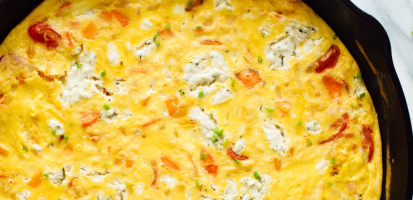
Basic Frittata Formula
12 eggs, whisked just until the egg yolks and whites are blended
3 tablespoons full-fat dairy
3 cups cooked and seasoned vegetables or other add-ins
1 cup (4 ounces) grated or crumbled cheese
1/2 teaspoon salt
Recommended Frittata Flavor Combinations
General Frittata Tips
Dairy options
Use full-fat dairy. I’ve had great results with heavy cream, half-and-half and whole milk. Sour cream, crème fraîche and yogurt will work as well. However, two percent and skim milk are too watery. Omitting the dairy altogether results in a frittata that is, unsurprisingly, more eggy in flavor and less creamy.
Testing notes: America’s Test Kitchen recommends just three tablespoons of dairy and Bon Appetit recommends 1/2 cup. I tried both and slightly preferred the America’s Test Kitchen version, so I opted for the lower amount.
Pre-cook your vegetables, and use a lot of them
Vegetables should be tender, seasoned and cooked before adding the eggs. Raw vegetables release too much water and won’t be fully cooked by the time the eggs are done. Pre-cook your vegetables by sautéing, roasting, or steaming them to bring out their best qualities.
A large frittata made with one dozen eggs can accommodate up to three cups cooked vegetables, so that means you’ll need even more than three cups of raw vegetables!
STORAGE SUGGESTIONS: Frittata leftovers keep well for a few days in the refrigerator. You can serve leftover frittata chilled, let it come to room temperature on its own, or gently warm individual slices in the microwave or oven.
You can get creative with leftover frittata—use a slice as a sandwich filling, or break it up for easy breakfast tacos.
PREPARE IN ADVANCE: The baked method is best for make-ahead frittatas. You can whisk the eggs, cooked vegetables and cheese together in advance. Cover and refrigerate the mixture until you’re ready to bake (it should keep well for up to two days). Grease a casserole dish or muffin tin and bake as directed above.