
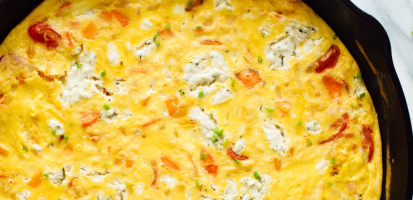
Frittatas (Stovetop or Baked)

Frittatas (Stovetop or Baked)

Traditional Frittatas vs. Baked Frittatas In this recipe, you’ll learn how to make traditional frittatas using the stovetop-to-oven skillet method. Be sure to use a reasonable oven temperature (not the broiler) and it’s suggested cooking the frittata on the middle rack, so you can watch it while it cooks. Life’s too short for burnt frittatas! I’ve also provided instructions on how to make baked frittatas (in a casserole dish or muffin tin), which are more hands-off. The baked options are particularly great if you need a make-ahead option or when your stovetop is otherwise occupied.

Description

Directions

Step 1
Preheat the oven to 425 degrees Fahrenheit for the traditional stovetop method, or 350 degrees for the baked methods (casserole or mini/muffins).
Step 2
Crack the eggs into a medium mixing bowl. Add your dairy of choice and the salt. Whisk just until the egg yolks and whites are blended. Whisk in all or half of the cheese (you can reserve the other half for topping the frittata before baking, if desired). Set the mixture aside.
Step 3
In a 12-inch cast iron skillet (or any other large skillet that’s oven safe), warm the olive oil over medium heat until shimmering. Add the vegetables, starting with chopped onions or other dense vegetables. Cook for a few minutes, stirring occasionally, then add any softer vegetables such as zucchini. Cook until those vegetables are tender, then add any garlic or greens, and cook until fragrant or wilted. Season with salt, to taste.
Step 4
Traditional stovetop option: Whisk the eggs once more and pour the mixture over the vegetables. Stir with a spatula briefly to combine and distribute the mixture evenly across the pan. If you reserved any cheese, sprinkle it on top of the frittata now.
Step 5
Once the outside edge of the frittata turns lighter in color (about 30 seconds to 1 minute), carefully transfer the frittata to the oven. Bake for 7 to 14 minutes (keep an eye on it), until the eggs are puffed and appear cooked, and the center of the frittata jiggles just a bit when you give it a gentle shimmy. Remove the frittata from the oven and place it on a cooling rack to cool. Garnish with herbs, slice with a sharp knife, and serve.
Step 6
Baked casserole option: Let the cooked vegetables cool for a few minutes. In the meantime, grease a 9 by 13-inch pan with butter, which works better than cooking spray. Stir the lightly cooled veggies into the egg mixture, then pour it all into the pan. If you reserved any cheese, sprinkle it on top of the frittata now.
Step 7
Bake for 20 to 25 minutes (keep an eye on it), until the eggs are puffed and appear cooked, and the center of the frittata jiggles just a bit when you give it a gentle shimmy. Remove the frittata from the oven and place it on a cooling rack to cool. Garnish with herbs, slice with a sharp knife, and serve.
Step 8
Baked mini frittata option: Let the cooked vegetables cool for a few minutes, then stir them into the egg mixture. Grease 18 muffin cups (I used two muffin pans for this), then fill the cups evenly with a scant ⅓ cup of the mixture. If you reserved any cheese, sprinkle it on top of the frittatas now.
Step 9
Bake for 13 to 17 minutes, until the eggs are puffed and appear cooked, and the center of the frittatas jiggle just a bit when you give the pan a gentle shimmy (this happens quickly so keep an eye on them; my pan with only 6 muffins finished sooner). Remove the pans from the oven and place them on a cooling rack to cool. Garnish with herbs, and serve.

Ingredients

12 eggs
3 tablespoons full-fat dairy (heavy cream, half-and-half, whole milk, sour cream, crème fraîche or yogurt)
½ teaspoon salt
1 cup (4 ounces) grated or crumbled cheese
3 to 5 cups chopped vegetables or greens of choice (or up to 3 cups leftover cooked vegetables or greens)
1 tablespoon olive oil
Garnish: Chopped or torn fresh, leafy herbs (basil, parsley, cilantro, or dill)

Menu Info

Total Time:

45 min

Prep Time:

20 min

Servings

8

Notes


Basic Frittata Formula
12 eggs, whisked just until the egg yolks and whites are blended
3 tablespoons full-fat dairy
3 cups cooked and seasoned vegetables or other add-ins
1 cup (4 ounces) grated or crumbled cheese
1/2 teaspoon salt

Recommended Frittata Flavor Combinations

  • Spinach, artichoke and feta cheese
  • Broccoli, cheddar and green onion
  • Cremini mushrooms, arugula and goat cheese
  • Cherry tomatoes, zucchini, mozzarella and basil
  • Yellow onion, carrot, bell pepper, goat cheese and chives


General Frittata Tips
Dairy options
Use full-fat dairy. I’ve had great results with heavy cream, half-and-half and whole milk. Sour cream, crème fraîche and yogurt will work as well. However, two percent and skim milk are too watery. Omitting the dairy altogether results in a frittata that is, unsurprisingly, more eggy in flavor and less creamy.

Testing notes: America’s Test Kitchen recommends just three tablespoons of dairy and Bon Appetit recommends 1/2 cup. I tried both and slightly preferred the America’s Test Kitchen version, so I opted for the lower amount.

Pre-cook your vegetables, and use a lot of them
Vegetables should be tender, seasoned and cooked before adding the eggs. Raw vegetables release too much water and won’t be fully cooked by the time the eggs are done. Pre-cook your vegetables by sautéing, roasting, or steaming them to bring out their best qualities.

A large frittata made with one dozen eggs can accommodate up to three cups cooked vegetables, so that means you’ll need even more than three cups of raw vegetables!


STORAGE SUGGESTIONS: Frittata leftovers keep well for a few days in the refrigerator. You can serve leftover frittata chilled, let it come to room temperature on its own, or gently warm individual slices in the microwave or oven.

You can get creative with leftover frittata—use a slice as a sandwich filling, or break it up for easy breakfast tacos.

PREPARE IN ADVANCE: The baked method is best for make-ahead frittatas. You can whisk the eggs, cooked vegetables and cheese together in advance. Cover and refrigerate the mixture until you’re ready to bake (it should keep well for up to two days). Grease a casserole dish or muffin tin and bake as directed above.